

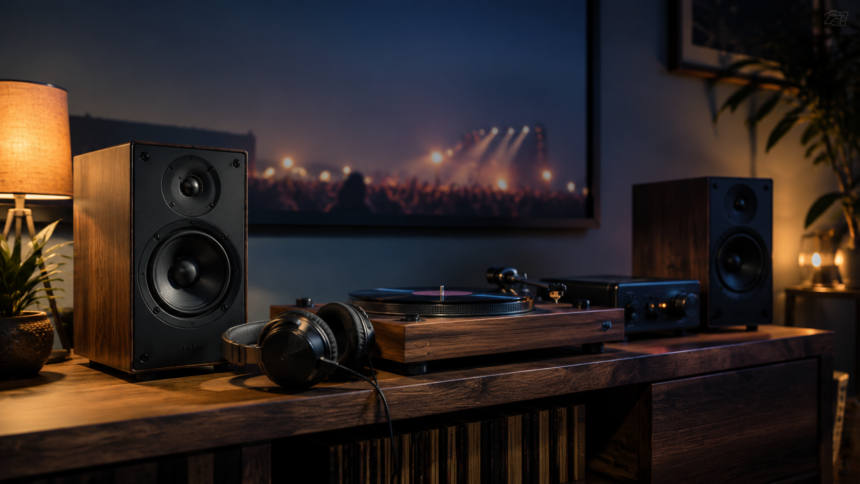
The phrase “site TheSoundsTour music” usually leads people to TheSoundsTour.com, a blog covering music listening, speakers, headphones, sound systems and related audio topics. Despite the name, the website is better understood as an editorial resource than as a conventional concert-tour platform.
That distinction matters. Someone searching for tour dates may expect artist schedules and ticket links, while another reader may be looking for help choosing speakers or improving a listening room. TheSoundsTour contains material for both interests, but its clearest focus is audio equipment and practical sound advice.
What Is TheSoundsTour?
TheSoundsTour presents itself as a website for people interested in sound. Its main navigation includes sections for speakers, buying guides, how-to articles, tips and motorcycle audio.
The website’s About page places particular emphasis on motorcycle speakers and custom sound systems. It also introduces Elena as an audio enthusiast and content creator who writes about speakers, soundbars, headphones and home-listening equipment.
This makes the site most useful as a music and audio blog. It is not simply a database of performers, albums or concert dates. Much of its content looks at the equipment and environments through which people experience music.
What the Site Covers
The strongest connection between TheSoundsTour and music is its coverage of playback equipment. Articles discuss subjects such as portable speakers, home audio, headphones, studio acoustics and sound levels.
Its speaker content ranges from basic buying advice to guides about impedance, placement and different product categories. Readers can also find articles about powered PA speakers, soundbars, computer speakers and motorcycle systems.
Headphone coverage considers comfort, sound signature, isolation and intended use. A reader comparing headphones for commuting, gaming or focused listening may find useful terminology and questions to consider before purchasing.
The site also publishes broader music features. Examples include articles about studio design, vinyl, live-tour funding and the way listening environments affect sound. This mix makes the website relevant to casual listeners as well as people building more specialized audio systems.
Music and Audio Guides
A useful audio guide should connect technical features to everyday listening. Numbers alone rarely explain whether a product will work well in a particular room, vehicle or routine.
For speakers, the important questions include room size, listening distance, placement, amplifier compatibility and preferred volume. A large floorstanding model may be unnecessary in a small bedroom, while a compact wireless speaker might struggle in an open outdoor space.
Headphone decisions are equally personal. Open-back headphones can provide an airy presentation in a quiet room, but their sound leakage makes them less practical on public transport. Closed-back and noise-cancelling models generally make more sense when isolation is important.
TheSoundsTour’s audio articles are most helpful when readers use them to understand these trade-offs. Its guide to building a music-listening setup is an example of content that looks beyond a single device and considers the wider listening environment.
Motorcycle Audio
Motorcycle sound systems are one of the website’s more distinctive subjects. This area involves problems that do not exist in a normal living room, including wind, engine noise, road vibration, limited mounting space and exposure to weather.
A motorcycle speaker should not be judged only by its advertised wattage. Weather resistance, mounting security, amplifier matching and clarity at road speed can be more important than a large power figure on a product page.
Installation also requires care. Wiring must be protected from heat and moving components, and the electrical load should be suitable for the motorcycle’s charging system. Product-specific instructions from the motorcycle and audio manufacturers should always take priority over general online advice.
TheSoundsTour can help readers learn the vocabulary and narrow their options. Final compatibility, however, should be confirmed through official manuals or an experienced installer.
Smarter Speaker Research
Speaker performance depends heavily on the room. Walls, floors, furniture and listening position can change the balance of bass, vocals and high frequencies.
The site’s article about how studio design shapes music explains the roles of reflection, absorption and diffusion. These ideas apply outside professional studios too. Moving a speaker away from a corner or changing the listening position can sometimes produce a more noticeable improvement than replacing a cable or accessory.
When reading a speaker guide, look for information about the test environment. A recommendation is more meaningful when the writer explains the room, source equipment, speaker position and type of music used.
Also distinguish between specifications and listening impressions. Frequency response, dimensions and connection types can be checked. Descriptions such as “warm,” “bright” or “spacious” are subjective and may not match every listener’s experience.
Choosing Headphones
Comfort should receive as much attention as sound quality. A headphone can be technically impressive and still be a poor choice if its weight, clamping pressure or ear-pad shape becomes uncomfortable after half an hour.
TheSoundsTour’s high-end headphone guide discusses sound signature, driver technology, comfort and system compatibility. These are useful starting points, but buyers should test headphones when possible.
A proper comparison should use the same tracks, similar volume levels and the same source device. Louder equipment often appears more exciting during a quick test, even when it is not more accurate.
Safe listening matters as well. The World Health Organization states that an average level of 80 dB can be safe for up to 40 hours per week, while safe exposure time drops sharply as volume rises. At 90 dB, the recommended weekly listening time falls to about four hours.
Finding Useful Articles
The fastest way to use TheSoundsTour is to begin with a specific problem. Searching for “speaker placement,” “motorcycle amplifier,” “headphone comfort” or an exact model name will usually produce better results than browsing without a clear goal.
The main category menu is another useful starting point. The Speakers, Buying Guides, How To and Motorcycle Speakers sections can reduce the number of unrelated results.
Check the article’s publication date and byline before relying on it. Product prices, apps, wireless standards and model availability can change quickly. An older guide may still explain audio fundamentals well, but its purchasing information may no longer be current.
Readers should also examine any external links. A linked manufacturer manual, recognized standard or independent test provides stronger support than a claim presented without evidence.
A Broad Editorial Mix
TheSoundsTour currently publishes material beyond music and audio. Its homepage includes posts about technology, gaming, travel and other consumer subjects alongside speaker and music articles.
This wide editorial mix does not automatically make its audio content unhelpful. It does mean that visitors should use categories and search tools instead of assuming every recent post will be relevant to sound.
It also makes individual evaluation important. A carefully sourced audio article should be judged on its evidence, clarity and accuracy rather than solely on the website’s name or overall topic range.
Checking Product Advice
No single review should decide an expensive purchase. Audio preferences vary, and commercial relationships can influence how products are presented.
The US Federal Trade Commission’s online-shopping guidance recommends consulting several sources and considering who wrote a review, where it appears and whether the reviewer received an incentive. This is sound practice for speakers, headphones and other music equipment.
Before buying, confirm the exact model number, current specifications, warranty and return policy on the manufacturer or authorized retailer’s website. Look for clear disclosure when an article contains affiliate links or sponsored products.
For costly equipment, a home trial or retailer with a reasonable return period can be particularly valuable. Speakers and headphones may sound different in your space than they did in someone else’s review.
Concert Information
The name TheSoundsTour can create the impression that the website is an official ticketing service. Its present structure, however, is organized mainly around editorial articles rather than a live ticket inventory.
Readers should therefore verify concert dates through the artist’s official website, verified social accounts, the venue or an authorized ticket seller. Do not assume that a tour date, lineup or ticket offer is official merely because it appears in a blog post.
The same caution applies when searching for the Swedish band The Sounds or the touring production of The Sound of Music. These are separate subjects with their own official channels.
Who Will Find It Useful?
TheSoundsTour is likely to be most useful for casual music listeners, first-time audio buyers, home-listening enthusiasts and motorcycle owners researching sound systems.
Beginners may appreciate plain-language explanations of unfamiliar terms. More experienced readers can use the site to discover topics or create a shortlist, although they may need independent measurements and manufacturer documentation for deeper technical decisions.
The site can also help readers recognize how much the listening environment matters. Good sound is not determined by the product alone. Placement, background noise, room acoustics, fit and listening level all influence the final experience.
Final View
Site TheSoundsTour music content is best approached as a starting point for audio research. The website covers a useful range of speaker, headphone, motorcycle-audio and music-listening topics in an accessible format.
Its broad collection of unrelated material and occasional ambiguity about concerts make careful navigation necessary. Readers should focus on relevant categories, check dates and sources, and confirm commercial or technical claims elsewhere.
Used that way, TheSoundsTour can help people ask better questions before buying audio equipment or changing a listening setup. That is often more valuable than being handed a simple list of products without context.
Frequently Asked Questions
What is Site TheSoundsTour Music?
Site TheSoundsTour music refers to music and audio-related content published on TheSoundsTour.com. The website covers speakers, headphones, sound systems, listening environments and some live-music subjects.
Is TheSoundsTour a music-streaming service?
No. The website does not operate like Spotify, Apple Music or another streaming platform. It primarily publishes editorial articles, guides and product-related information.
Does TheSoundsTour sell concert tickets?
The current website is mainly an editorial blog and should not automatically be treated as an authorized ticket seller. Confirm tickets through the artist, venue or a recognized ticketing platform.
Is TheSoundsTour connected to the band The Sounds?
TheSoundsTour.com should not be confused with the Swedish rock band The Sounds. Readers searching for the band should use its verified profiles and official concert channels.
What type of audio content is available?
The site publishes material about home speakers, headphones, soundbars, motorcycle audio, studio acoustics, listening rooms and equipment-buying decisions.
Can I trust TheSoundsTour product recommendations?
Its articles can be useful for initial research, but no product recommendation should be followed without comparison. Check manufacturer specifications, independent reviews, warranty terms and current prices before purchasing.
Is the website suitable for beginners?
Yes. Many articles use accessible language and explain basic considerations such as speaker type, headphone comfort and listening environment. Readers seeking laboratory measurements may need additional specialist sources.
How can I find music articles on TheSoundsTour?
Use the website’s search function and enter a precise subject, artist or product name. The Speakers, Buying Guides and How To categories are also useful places to begin.
Why does the site cover subjects outside music?
TheSoundsTour has developed into a broad-content blog, so its recent posts are not limited to music or audio. Using the search tool and topic categories makes it easier to avoid unrelated material.
How should I use TheSoundsTour before buying audio equipment?
Use the site to learn terminology, identify suitable product types and prepare a shortlist. Then verify specifications with the manufacturer, compare several independent sources and test the equipment when possible.
Read also PO Box 4988 Swindon: Who Uses It and Is the Letter Genuine?