

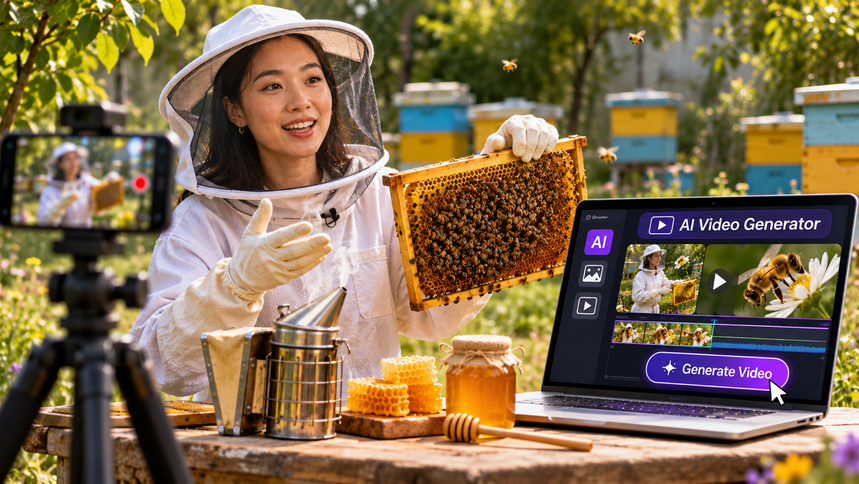
A jar of honey on a breakfast table represents far more than a sweet ingredient. Behind it is a complex process involving flowering plants, honeybees, seasonal conditions, and the careful work of beekeepers. Many people enjoy honey without knowing how a colony operates or what responsible beekeeping actually involves. A visual explanation can make these details easier to appreciate. An ai video generator can help beekeeping educators, agricultural organizations, honey producers, and environmental groups introduce the subject through engaging visual stories. Instead of presenting disconnected facts about bees, they can take viewers inside an apiary and explain how a colony develops, gathers resources, and produces honey. The technology is particularly useful for making processes visible that people would otherwise struggle to observe safely.
Meet the Different Members of a Honeybee Colony
A honeybee colony functions through cooperation, with different members performing distinct roles. The queen lays eggs and helps maintain the colony’s reproductive cycle. Worker bees carry out many essential activities, including caring for developing bees, maintaining the hive, collecting resources, and protecting the colony. Male bees, known as drones, have a reproductive role.
A video can introduce these roles through separate visual sequences rather than describing the entire colony at once. Viewers might first see the queen moving among the comb, followed by worker bees feeding larvae and others returning from foraging trips. This approach helps explain why the colony is not simply a group of insects living together. Its survival depends on coordinated activity and changing responsibilities throughout the life of its members.
Follow a Worker Bee Beyond the Hive
One of the most interesting parts of beekeeping is understanding what happens outside the hive. Worker bees visit flowers to collect nectar and pollen. Nectar can be processed into honey, while pollen provides important nutrients for the colony. A visual journey can follow a worker bee from the hive to nearby flowering plants and back again. The sequence can explain how bees move between flowers and how pollen may be transferred during their visits. This introduces pollination as an important part of their relationship with the surrounding environment.
However, the explanation should avoid suggesting that every plant depends on honeybees alone. Different plants are pollinated by different insects, animals, or other natural processes. Showing this wider context gives viewers a more balanced understanding of pollination.
Understand Why the Hive Changes With the Seasons
Beekeeping is not a task that remains identical throughout the year. Flower availability, temperature, rainfall, and other environmental conditions influence colony activity. A hive that appears busy during a period of abundant flowering may behave differently when food sources become limited. A seasonal video sequence can illustrate these changes. Spring might introduce increasing foraging activity, while a period of limited flowering could show the importance of monitoring available food resources. Other scenes can explain why beekeepers pay attention to colony conditions and prepare for changing weather.
During creative planning, Dreamina can help explore visual styles for presenting different seasonal environments and hive settings. The final educational content should still reflect the climate and beekeeping practices relevant to its intended audience. This seasonal perspective helps viewers recognize that successful beekeeping involves observation and planning rather than following one routine throughout the year.
Show What Beekeepers Actually Look For During Inspections
Hive inspections are an important part of responsible colony management. Beekeepers may examine brood patterns, food stores, comb condition, signs of disease, and the general activity of the colony. The purpose is to understand whether the bees are developing normally and whether any management action is needed. A video can explain these observations through close-up illustrations. For instance, it might compare healthy-looking brood areas with visual signs that warrant closer investigation. It can also introduce the protective equipment and careful handling methods used during inspections.
These scenes should not encourage inexperienced viewers to open a hive without proper knowledge. Honeybees can defend their colony, and some people may have serious allergic reactions to stings. Actual inspections should be carried out using suitable training, equipment, and local safety guidance.
Explain How Nectar Becomes Honey
Honey production is another process that benefits from visual storytelling. Foraging bees collect nectar and bring it back to the colony. Other worker bees help process and store it in the wax comb. Through the removal of moisture and other natural processes, the nectar gradually becomes honey. A visual sequence can break this transformation into manageable stages. It might begin with a flower, move to a returning worker bee, and then show nectar being deposited into a cell. The final scene can introduce a sealed honeycomb as a sign that the stored honey has reached a suitable stage.
It is important to distinguish honey production from the simple idea of bees storing flower liquid unchanged. The colony’s activity and the reduction of moisture are essential parts of the process.
Give Viewers a Look at Responsible Honey Harvesting
Honey harvesting should be explained as a managed activity, not an invitation to remove everything stored in a hive. Beekeepers need to consider the colony’s condition and ensure that adequate food remains available for the bees. The timing and amount of harvesting depend on local conditions, the strength of the colony, and applicable beekeeping practices.
A video can show the broad stages of harvesting, including removing suitable frames, extracting honey, filtering it when appropriate, and preparing it for storage. It can also explain why clean equipment and suitable food-handling practices matter. The presentation should make clear that honey extraction requires care. Improper handling can damage comb, disturb the colony, or compromise the quality of the product.
Separate Beekeeping Education From Promotional Claims
Honey producers may use visual content to introduce their apiaries, describe their practices, or explain differences between varieties. However, promotional material should not make unsupported claims about health benefits, purity, or environmental impact.
A useful educational video explains what viewers can verify. It might describe the floral sources associated with a honey variety, the general harvesting process, or how the producer handles and stores the product. Claims about origin and production should match reliable records. This transparency can help audiences understand the work behind a jar of honey without confusing appealing visuals with evidence.
Final Thoughts
An AI video generator can make beekeeping easier to understand by showing how a honeybee colony functions, how worker bees interact with flowering plants, and how nectar becomes stored honey. It can also introduce seasonal management, hive inspections, and responsible harvesting in a clear visual sequence. The subject deserves accurate treatment, particularly where animal welfare and safety are concerned. When educational storytelling is guided by sound beekeeping knowledge, it can help people appreciate both the work of beekeepers and the importance of honeybee colonies.
Frequently Asked Questions
What is an apiary?
An apiary is a location where beehives are kept and managed by beekeepers. It may contain a small number of hives or a much larger collection, depending on its purpose and scale.
Do all honeybees in a colony perform the same tasks?
No. The queen, worker bees, and drones have different biological roles. Worker bees also carry out different tasks as they develop and as the needs of the colony change.
Why do beekeepers inspect their hives?
Inspections help beekeepers assess colony health, food stores, brood development, comb condition, and possible signs of pests or disease.
Is honey produced directly from flower nectar?
Bees collect nectar and process it inside the colony. Through enzymatic activity and moisture reduction, it gradually develops into the honey stored in comb cells.
Can beginners safely manage a beehive after watching an educational video?
A video can introduce basic concepts, but it cannot replace practical training. Beginners should learn from experienced beekeepers and follow appropriate protective and local safety guidance.