

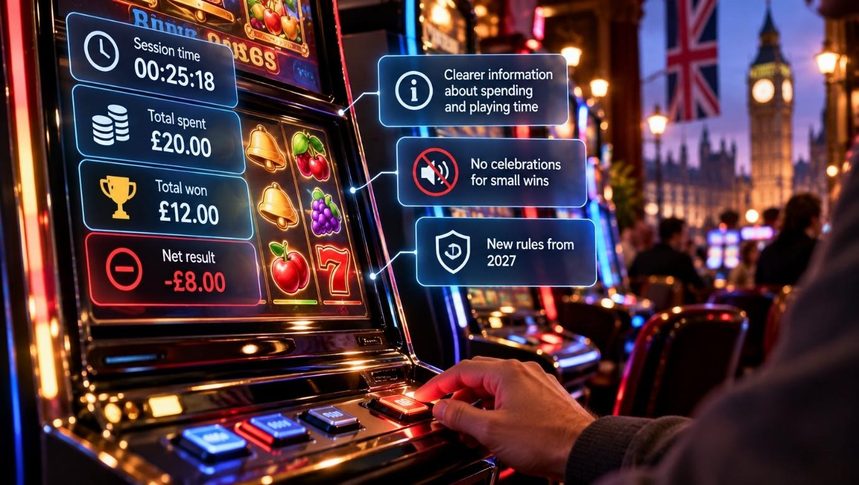
The Gambling Commission has unveiled new standards requiring gaming machines to provide clearer information about spending and playing time. The changes, due to take effect from 2027, could reshape the experience of playing in Britain’s casinos, betting shops and amusement venues.
Britain’s gaming machines are facing a significant overhaul after the Gambling Commission announced new requirements designed to give consumers greater visibility over how much money they spend and how long they play.
The changes, published on 30 September 2026, will introduce additional safeguards for certain gaming machines found in casinos, betting shops and other licensed premises.
Among the measures are clearer session information, improved spending controls and restrictions on game features that could create misleading impressions about financial outcomes.
The development has also reached Parliament, with correspondence concerning the new rules published by the Digital, Culture, Media and Sport Committee on 13 October.
Although most changes will not come into force until June 2027, the announcement signals a shift in how Britain approaches the design of gambling products.
The focus is increasingly moving beyond what games offer towards how their interfaces communicate information to consumers.
Players will see how much they have won or lost
One of the most significant changes concerns the information displayed during gaming sessions. Under the new requirements, newly introduced Category B gaming machines will need to provide consumers with improved access to gambling management tools.
These include information showing how long a session has lasted and the player’s net financial position. The distinction between individual wins and an overall loss is particularly important.
A machine might award several small prizes during a session while the player continues to spend more than they receive. Without clear information, consumers may find it difficult to assess their overall expenditure. The new standards aim to make that information more accessible and understandable.
According to the Gambling Commission’s official announcement, the measures are intended to improve consumer protection while supporting operators in identifying potentially harmful gambling behaviour.
The requirements will apply according to the implementation timetable and technical scope established by the regulator.
Smaller prizes can no longer be presented as major victories
Another notable reform targets how gaming machines celebrate winning outcomes.
Certain machines use flashing lights, sound effects and animations when a prize is awarded, even when the amount returned is smaller than the original stake. For example, a player spending £2 on a game might receive £1 back.
Although the machine has produced a prize, the transaction still represents a net loss of £1.
Under the forthcoming standards, gaming machines will no longer be permitted to celebrate awards below the stake size in the manner prohibited by the updated technical requirements.
The distinction matters because visual and auditory feedback can influence how people interpret results. An animated celebration might suggest success, even when the player’s balance has decreased.
By restricting these features, the regulator intends to make the relationship between spending and outcomes clearer. The rules also prohibit certain features that allow customers to reduce the time taken for a result to become known.
What traditional games reveal about digital entertainment
The announcement highlights a wider question facing the entertainment industry: how does the presentation of a game influence the way people interact with it?
Many modern digital experiences use mechanics that originated in physical games, amusement attractions and arcade machines.
Plinko provides a recognisable example. The game involves dropping a ball or disc through a field of pegs, causing it to bounce unpredictably before reaching one of several destinations.
Variations of this principle have appeared in television entertainment, amusement machines and interactive digital products. The Plinko gambling game available through Stake illustrates how the familiar pegboard concept can be adapted into a digital game involving real-money wagers.
Unlike a traditional physical amusement attraction, casino-style versions incorporate financial stakes and outcomes governed by the game’s rules and probabilities. They therefore carry the risk of monetary loss.
The British Gambling Commission’s newly announced machine standards do not automatically apply to online games offered by international platforms. Remote gambling is subject to a separate regulatory framework, and the availability or licensing status of a particular service must be assessed independently.
Nevertheless, the broader discussion about interface design is relevant across different forms of interactive entertainment.
The regulator received more than 1,000 consultation responses
The new standards follow a consultation launched in January 2025. According to the Gambling Commission, the process attracted more than 1,000 responses, including submissions containing consumer research, technical evidence and industry feedback.
The regulator subsequently adjusted several elements of its proposals. One important decision was to exclude existing gaming machines from certain new requirements concerning session information and limit-setting tools.
The move acknowledged the cost of modifying equipment already in use, particularly for smaller businesses and social clubs. The regulator also revised how session information should be presented, giving greater consideration to the practical requirements of operators.
In an explanation published alongside the announcement, senior policy manager Graham Burgin said the consultation had influenced the final approach.
The resulting framework attempts to balance consumer protection with the technical and financial challenges involved in updating gaming equipment.
Why the changes will not happen overnight
Although the standards have been announced, their implementation will take place over several stages. A revised definition of a gaming session will come into force on 30 March 2027.
Most of the remaining technical changes are scheduled for 30 June 2027. Requirements concerning certain staff alerts will follow a longer implementation period, with a deadline of 3 October 2028.
These dates reflect the technical complexity of modifying gaming machines and the systems used to monitor them. Manufacturers may need to update software, redesign interfaces and test new functions.
Operators will also need to consider how the information generated by machines can support customer interactions and compliance procedures.
The phased introduction is intended to give businesses sufficient time to prepare while enabling the regulator to evaluate the consequences of the changes.
Gaming technology is becoming a consumer protection issue
The new rules demonstrate how consumer protection is increasingly connected to software design.
Traditionally, discussions about gambling safeguards focused heavily on age restrictions, licensing and financial controls.
Those measures remain important, but regulators are paying greater attention to the experience presented through screens and interactive features. Timers, animations, spending summaries and automatic notifications can all influence how consumers understand their activity.
A clearer interface may help people recognise the difference between receiving a prize and making an overall profit. It can also make the duration of a gaming session more visible.
However, these features cannot eliminate the financial risks associated with gambling. Their effectiveness will depend on implementation, consumer behaviour and the broader protections available.
A significant test for Britain’s gambling industry
The Gambling Commission’s announcement represents an important step towards making gaming-machine design more transparent.
For operators and manufacturers, the challenge will be translating regulatory requirements into technology that works consistently in everyday environments.
For consumers, the most visible changes should involve clearer financial information and fewer potentially misleading celebrations of losing outcomes. The reforms also raise a broader issue for the digital entertainment economy.
As games become increasingly sophisticated, questions about how software presents risk, spending and rewards are likely to attract continued attention.
Britain’s new machine standards will provide an opportunity to examine whether clearer information and revised game features can improve consumer understanding.
The ultimate test will not be whether gaming machines look different, but whether players are better able to understand what their time and money are actually producing.