

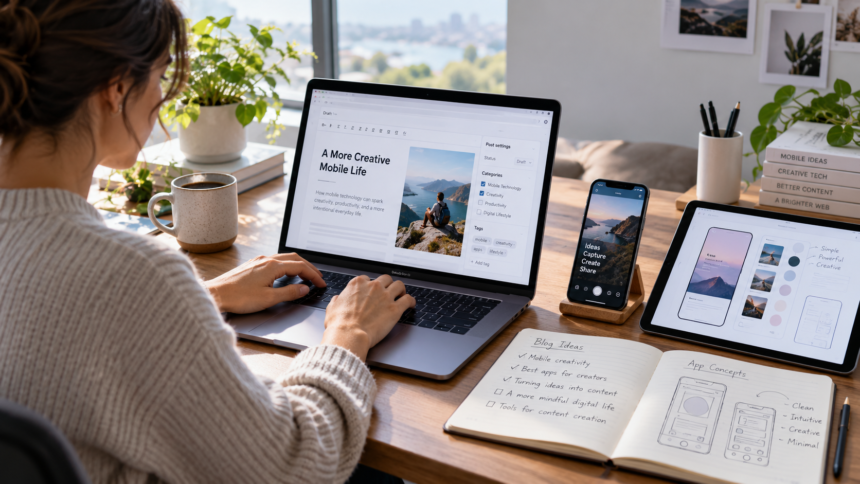
Writing for MobileCreative.org blog involves creating clear, practical articles about mobile technology, app development, user experience, and digital creativity. Writers interested in contributing should understand the website’s subject areas, study its existing articles, and develop useful content for readers interested in mobile products. A successful approach combines relevant research, accessible language, original examples, and a well-organized article. Before submitting work, prospective contributors should also confirm the website’s current editorial requirements.
| Detail | Information |
|---|---|
| Website | MobileCreative.org |
| Main subjects | Mobile app development, mobile gaming, and mobile UI/UX design |
| Content focus | Practical guides, explanations, and mobile-related insights |
| Relevant writers | Technology writers, designers, developers, and digital content creators |
| Writing approach | Clear, informative, mobile-friendly content |
| Contact method | Official contact page |
| Contribution guidance | The website publishes articles about preparing and pitching contributions |
What Is MobileCreative.org?
MobileCreative.org is a website featuring articles about mobile technology, creative digital experiences, and application design. Its navigation includes dedicated categories for Mobile App Development, Mobile Gaming, and Mobile UI/UX Design.
These subject areas provide useful direction for writers considering contributing to the website.
For example, a writer experienced in interface design might explain how mobile navigation affects usability. A developer could discuss common challenges in building responsive applications, while a gaming enthusiast could explore how touchscreen controls influence gameplay.
The website also publishes guidance on preparing mobile-focused content. Its article, How to Write for MobileCreative.org, discusses practical writing principles, including clear structure, readable paragraphs, and useful examples.
For potential contributors, the central requirement is understanding what the intended reader wants to learn.
Rather than producing broad technology commentary, writers should aim to answer specific questions or explain practical challenges.
Why Consider Writing for MobileCreative.org Blog?
Writing for a website with defined subject areas can help contributors develop focused work and demonstrate their knowledge of a particular industry.
Mobile technology includes several disciplines, from application development to interface design and user engagement. Writers with relevant experience can translate technical ideas into accessible explanations.
There are several potential professional benefits.
Developing a Focused Writing Portfolio
A published article can demonstrate a writer’s ability to research a subject, organize information, and communicate with a specific audience.
For example, an article explaining common mobile onboarding mistakes could serve as a relevant portfolio sample for someone pursuing UX writing opportunities.
However, publication, payment, professional exposure, and future assignments should never be assumed. Contributors should confirm any terms directly with the website before committing work.
Sharing Practical Knowledge
Mobile design and development involve problems that readers may encounter repeatedly.
Topics such as confusing navigation, accessibility barriers, slow-loading interfaces, and unclear instructions offer opportunities for useful educational content.
A strong article explains the problem, identifies its causes, and offers possible solutions with appropriate evidence.
Building Subject-Matter Expertise
Researching mobile technology can also help writers strengthen their knowledge.
Preparing an article about application accessibility, for instance, encourages the writer to examine interface guidelines, investigate examples, and understand the needs of different users.
This process can make future writing more accurate and valuable.
How to Start Writing for MobileCreative.org Blog
Prospective contributors can prepare their work through a straightforward process.
1. Explore the Website’s Main Categories
Begin by reviewing the articles already published on MobileCreative.org.
Pay particular attention to its main categories:
- Mobile App Development: Application functionality, development practices, and technical challenges.
- Mobile Gaming: Game design, mobile gameplay, and related technologies.
- Mobile UI/UX Design: User interfaces, interaction patterns, accessibility, and usability.
These categories help establish the website’s existing subject coverage.
Read several recent articles and identify their intended audiences, structure, level of technical detail, and approach to explaining complex ideas.
The goal is not to copy existing content but to understand what would make a new article relevant.
2. Choose a Specific and Useful Topic
A focused subject generally provides a stronger foundation than a broad technology theme.
For example, “Mobile App Design” covers too many subjects for a practical article. “How to Design Clear Error Messages for Mobile Apps” offers a more specific reader benefit.
Other potential article ideas include:
- How to improve navigation in mobile applications.
- Common accessibility mistakes in mobile interfaces.
- Practical ways to simplify mobile onboarding.
- How touch controls influence mobile game design.
- Understanding responsive layouts for different screen sizes.
These are suggested topics, not confirmed editorial assignments.
Before developing one, check whether MobileCreative.org has already covered it and consider what additional information your article could provide.
3. Research Information Before Drafting
Reliable research helps distinguish an informative article from a collection of personal assumptions.
Depending on the subject, useful sources may include official platform documentation, accessibility standards, established technical publications, and carefully documented studies.
For mobile usability and accessibility, the W3C Web Accessibility Initiative provides authoritative guidance.
Writers discussing Android application design can consult Android Developers, while information about Apple’s interface conventions is available through the Apple Human Interface Guidelines.
Verify technical claims before presenting them as facts. Avoid unsupported performance statistics, invented case studies, or untested recommendations.
4. Build a Logical Article Structure
A useful article should have a clear beginning, middle, and conclusion.
Begin by identifying the question the reader wants answered. Address that question in the introduction rather than delaying the explanation.
Then organize the supporting information into descriptive sections.
For example, an article about mobile onboarding could follow this sequence:
- Explain what mobile onboarding means.
- Identify common onboarding problems.
- Describe practical design improvements.
- Explain how to evaluate the experience.
- Summarize the most useful recommendations.
This structure helps readers understand both the problem and the proposed solutions.
5. Edit for Clarity and Accuracy
After writing the first draft, review each section.
Remove sentences that repeat previous information. Replace unnecessary technical jargon with familiar language, while retaining essential technical terms and explaining them where needed.
Check that each heading accurately describes its section.
Finally, ensure every factual statement is supported by reliable information and that examples do not imply testing or results that never occurred.
Creating Mobile-Friendly Articles
Because MobileCreative.org covers mobile experiences, an article’s presentation should reflect sound digital readability practices.
Use Short, Meaningful Paragraphs
Large blocks of text can be uncomfortable to read on smaller screens.
Shorter paragraphs make it easier to identify important ideas and maintain reading progress.
However, brevity should not remove necessary explanations. The purpose is to make information understandable, not merely to reduce the number of words.
Write Descriptive Headings
Headings help readers navigate longer content.
A heading such as “Improving Touchscreen Navigation” communicates more than a vague heading such as “Important Tips.”
Clear headings also make an article easier to review before publication.
Include Helpful Examples
Examples can turn abstract advice into practical guidance.
Suppose an article recommends making mobile error messages more understandable.
Instead of simply telling readers to improve clarity, show the difference between an unclear message and an actionable one.
An error reading “Invalid input” gives limited guidance. A message explaining which field needs correction and why can help the user resolve the problem.
Examples should be realistic, clearly explained, and relevant to the article’s main point.
Pay Attention to Visual Accessibility
Screenshots and diagrams can support articles about application interfaces, provided they contribute useful information.
When preparing visuals:
- Use images with readable text and meaningful detail.
- Provide descriptive alternative text where appropriate.
- Explain important visual information in the surrounding article.
- Avoid relying on color alone to communicate meaning.
- Use images only when you have permission or an appropriate license.
These practices make content more accessible to different readers.
How to Prepare a Contribution Pitch
A contribution pitch introduces the proposed article before the full writing process begins.
MobileCreative.org publishes an article titled How to Start Writing for MobileCreative.org, which recommends preparing a focused idea, an explanation of its value, an outline, and relevant writing samples.
A practical pitch should communicate what the proposed article covers and why it belongs on the website.
It can include a suggested title, a short summary, several reader takeaways, and links to previously published work.
For instance, a pitch about mobile accessibility might explain that the article will address three common interface barriers and offer actionable ways to reduce them.
Avoid sending an unrelated article or a promotional message disguised as editorial content.
Important: The existence of contributor guidance does not independently establish that MobileCreative.org is currently accepting unsolicited submissions, offering payment, or guaranteeing publication.
The website has an official contact page with a message form. Prospective writers can use it to inquire about current contribution opportunities and requirements.
Common Mistakes to Avoid
Writers preparing content for MobileCreative.org should be aware of several problems that can weaken a submission.
Choosing an overly broad topic: An article covering every aspect of mobile development may lack the depth necessary to help readers. A narrower subject allows for more specific explanations.
Repeating existing information: Rewriting an article already available on the website adds little value. New submissions should contribute a fresh perspective, clearer explanation, or genuinely useful additional information.
Making unsupported claims: Statements about application performance, user behavior, or technology trends should be verified rather than presented as established facts without evidence.
Overusing technical terminology: Specialized language is sometimes necessary, but unexplained jargon may exclude readers who are unfamiliar with the subject.
Ignoring editorial requirements: Even a well-researched article may need revisions if it does not follow the publication’s requested format or submission procedures.
Avoiding these mistakes can improve the quality of the article regardless of where it is ultimately published.
Frequently Asked Questions
1. Can beginners start writing for MobileCreative.org blog?
Beginners can prepare relevant articles and inquire about contribution opportunities. They should study the website’s existing content, research their topics carefully, and provide examples of their writing. Whether beginner submissions are currently accepted must be confirmed with the website.
2. What topics are suitable for MobileCreative.org?
The website features categories covering mobile app development, mobile gaming, and mobile UI/UX design. Articles explaining practical problems, technologies, or design decisions within these areas are reasonable subjects to consider.
3. Does MobileCreative.org pay contributors?
Publicly reviewed contributor guidance does not establish a guaranteed payment rate or arrangement. Writers interested in paid opportunities should ask about compensation, publication terms, and content rights before agreeing to an assignment.
4. How can I contact MobileCreative.org about writing opportunities?
Visit the website’s contact page and use its available contact method to ask about submissions. Include a brief introduction, a relevant article idea, and links to writing samples if available. Do not assume that submitting an inquiry guarantees a response or acceptance.
Conclusion
Writing for MobileCreative.org blog begins with understanding the website’s focus on mobile applications, gaming, and user experience. Writers can prepare stronger articles by choosing specific subjects, using trustworthy research, explaining technical ideas clearly, and organizing content for comfortable mobile reading.
For anyone interested in contributing, the most practical next step is to review the website’s recent publications, prepare a relevant article proposal, and confirm its current submission requirements through the official contact page. The priority should always be original, accurate content that provides a clear benefit to readers.
Read also TheHomeTrotters McNamara: The People, Family Stories, and Facts Behind the Name